


How Your Stationery Reflects Your Workplace Personality
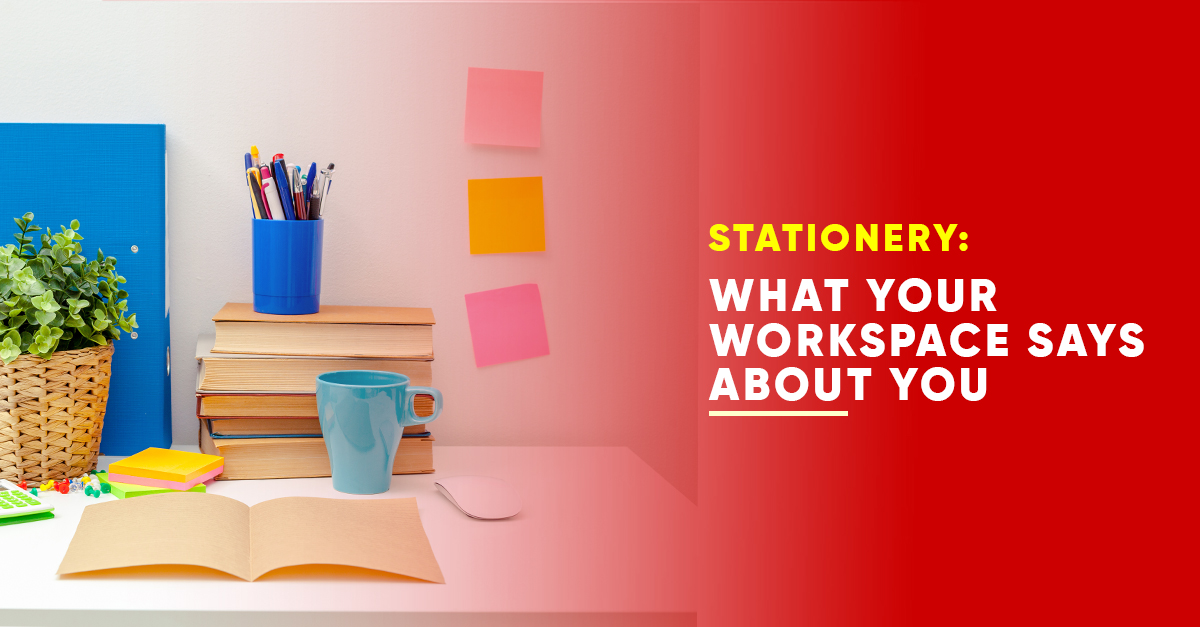
We rarely think of stationery as expressive, yet it often tells a quiet story about how we work. Many are the times we leave behind subtle clues about how we organise our thoughts, approach tasks, and collaborate with others. The clues accumulate quietly shaping how we are perceived and how we work together.
The Hidden Language of Your Desk
We unconsciously leave behind marks in our workspaces that reveal habits, moods and identity. Psychologists call these traces behavioural residue. According to psychologist Sam Gosling, our environment often communicates who we are long before we speak, providing subtle insight into how we prefer to work, think, and collaborate.
In the workplace, this means a colleague’s desk can offer subtle clues about how they think, how they organise information, and how they prefer to collaborate. A quick glance can suggest whether someone thrives on structure, creativity, logic, or speed.
Stationery plays a particularly important role here. Unlike office furniture, stationery is often personally chosen and used daily. Over time, it becomes an extension of how someone approaches their work.
Below are ways in colleagues reveal personalities through behaviourial residue:
1. Identity Claims
These are objects that communicate who you are, or who you want others to think you are. Branded notebooks, framed quotes, personalised stationery, or carefully curated desk layouts fall into this category.
2. Feeling Regulators
These are items used to manage emotions or energy levels. Plants, stress balls, colourful sticky notes, inspirational cards, or even music playlists reflect how someone regulates mood and focus.
3. Unintentional Residue
These are accidental traces of daily work life: scribbled reminders, coffee stains, stacked files, or half-filled notebooks. They reveal habits rather than intentions.
“Misreading people happens when we expect them to be transparent — they rarely are.” — Malcolm Gladwell, Talking to Strangers
The Silent Language of Stationery
We are familiar with body language and fashion as forms of self-expression, but stationery has its own quiet language. The tools people reach for repeatedly — whether colourful highlighters or a single trusted pen — reflect how they process ideas, manage tasks, and interact with others.
This doesn’t mean we should stereotype colleagues. Instead, it offers a starting point for better communication, empathy, and teamwork. When you begin to notice these patterns, certain work styles start to stand out clearly.
Below are common workplace personalities often reflected through stationery choices and workspace habits, and what they can tell us about how to work better together.
1. The Creative Thinker
Creative thinkers are usually easy to spot. Their desks are often colourful and expressive, featuring coloured marker pens, sticky notes in multiple colours, quirky pens, decorated notebooks, or sketch pads.
- What to know about them: They process information visually and enjoy brainstorming through illustrations, mind maps, and open-ended discussions. When collaborating with them, allow room for exploration before narrowing down ideas.
2. The Planner
Planners favour structure and predictability. Their stationery includes dated planners, neatly labelled folders, colour-coded calendars, and well-maintained notebooks.
- What to know about them: They value timelines, clarity, and preparation. When working with planners, provide clear objectives, deadlines, and agendas.
3. The Minimalist
Minimalists keep only what is necessary on their desks. A single pen, a notebook, and a clean workspace are often enough.
- What to know about them: They thrive on focus and efficiency. Keep communication concise and avoid unnecessary complexity when collaborating.
4. The Problem Solver
Problem solvers often have functional stationery — legal pads, sticky notes with quick reminders, and notebooks filled with diagrams or calculations.
- What to know about them: They enjoy tackling challenges head-on and appreciate logical, solution-oriented conversations.
5. The Efficient Multitasker
Multitaskers tend to have busy desks with multiple notebooks, open files, and pens scattered across their workspace.
- What to know about them: They juggle multiple responsibilities well but benefit from clear priorities and structured follow-ups.
Final Thoughts
Paying attention to the small, everyday details of a workspace can change how teams function. It helps reduce assumptions, improve communication, and create more intentional collaboration.
The next time you walk past a colleague’s desk, take a moment to observe. You may discover a better way to approach a conversation, offer support, or work together more effectively. And just as importantly, reflect on what your own workspace communicates about how you work.